
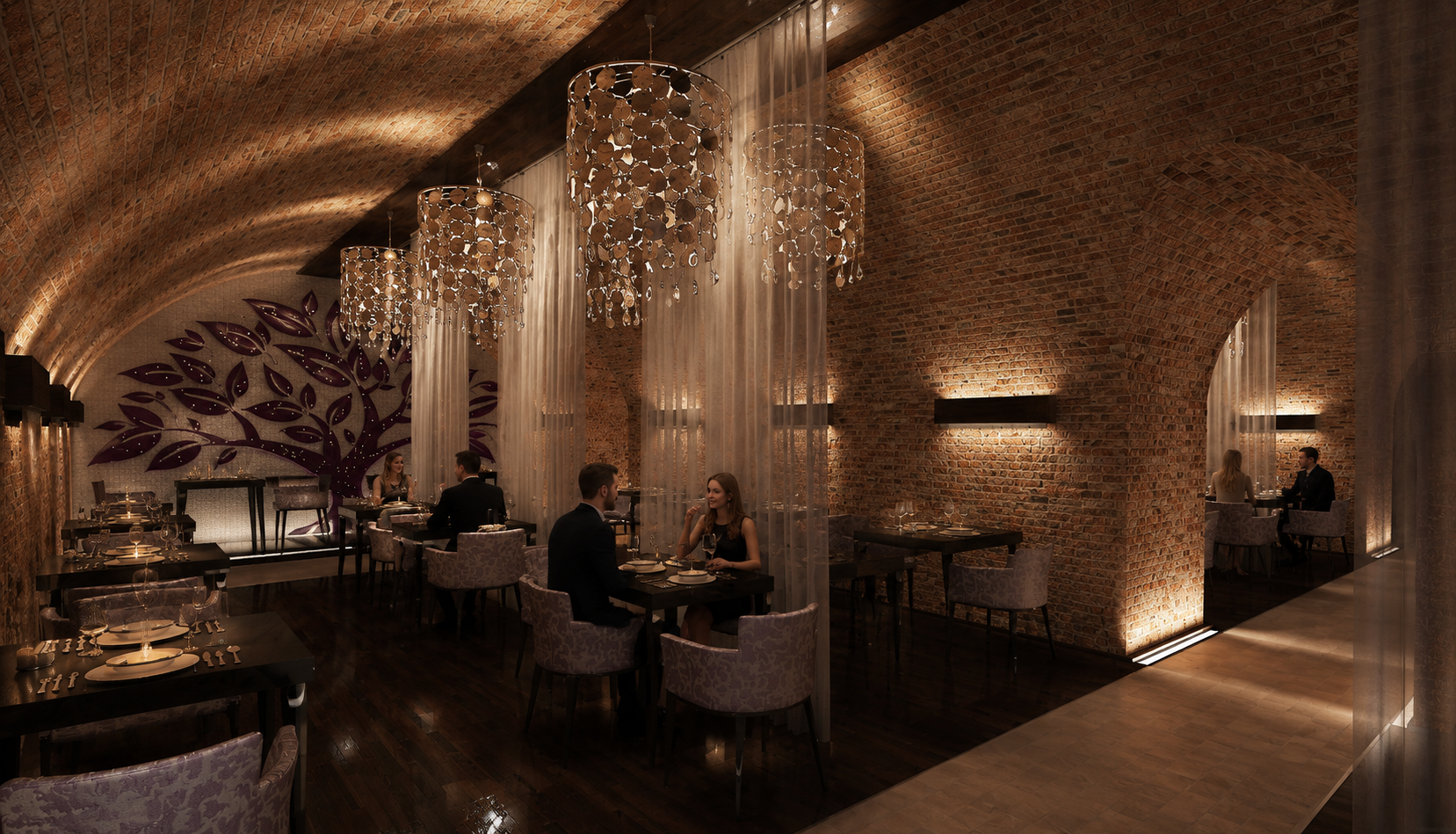
The revitalization of Fort Bema transforms a former military and industrial area into a new mixed-use destination while preserving the powerful historical identity of the site.
Originally known as Fort P – Parysów, Fort Bema was constructed between 1886 and 1890 as part of the inner defensive ring of the 19th-century Warsaw Fortress. Built as an earth-and-brick fortification, the complex included ramparts, brick casemates, military storage areas and an unusual wet moat that remains an important element of its landscape today. In 1921, the fort was renamed in honor of General Józef Bem.
The redevelopment builds upon these layers of history rather than erasing them. Existing military and industrial structures provide the framework for a new program of restaurants, bars, hotels, cultural spaces and leisure functions, bringing activity back to buildings and spaces that had lost their original purpose.
The architectural approach is based on a dialogue between preservation and contemporary intervention. Historic brickwork, industrial structures, fortifications and the distinctive landscape are retained as essential elements of the identity of the place, while new architecture introduces the comfort, transparency and functionality required for contemporary use.
Landscape plays an equally important role. The historic fortifications are surrounded by mature greenery, water and recreational areas, allowing the redevelopment to connect naturally with the larger Fort Bema park landscape. The former military grounds have gradually become part of a wider residential and recreational district, illustrating how post-military land can be reintegrated into the contemporary city.
The project gives Fort Bema a new chapter—transforming a once-closed military and industrial complex into an open, vibrant destination where history, architecture, hospitality and landscape come together.